Introduction: The first section of the Airport Link Line, which Yiyuan Metal participated in constructing, opened to traffic on December 27, 2024, right before New Year's Day!!! Known as the "East-West Arterial Line of Shanghai", it earns this title not only because it is the country's first rail transit line connecting two airports and three railway stations simultaneously. The planning of rail transit is closely tied to a city's development, and it will ultimately affect housing prices to varying degrees. The Airport Link Line has transformed far more than Shanghai's rail transit layout, and more profound changes to the property market and people's daily lives are yet to come. As one of the participating builders, my daily commute has become much more convenient. At this moment, all the hardships, grievances and difficulties endured over this year feel worthwhile.
The first section of the Airport Link Line, which Yiyuan Metal participated in constructing, opened to traffic on December 27, 2024, right before New Year's Day!!!
It is hailed as "the major east-west transport artery of Shanghai".
Its immense significance stems not only from the fact that it is the country’s first rail transit line connecting two airports and three railway stations simultaneously.
As we all know, traveling from Hongqiao International Airport to Pudong International Airport used to be extremely inconvenient.
After the opening of the link line, the travel time has been drastically cut to only 36 minutes. It also adopts China’s first domestically manufactured commuter Type C EMU.
Its maximum operating speed reaches a full 160 kilometers per hour, twice the top speed of most metro trains.
When parked on the tracks, it bears far more resemblance to a high-speed train.
As one of the project’s constructors, all the hardships, grievances and tough moments over the past year feel worthwhile at this moment.
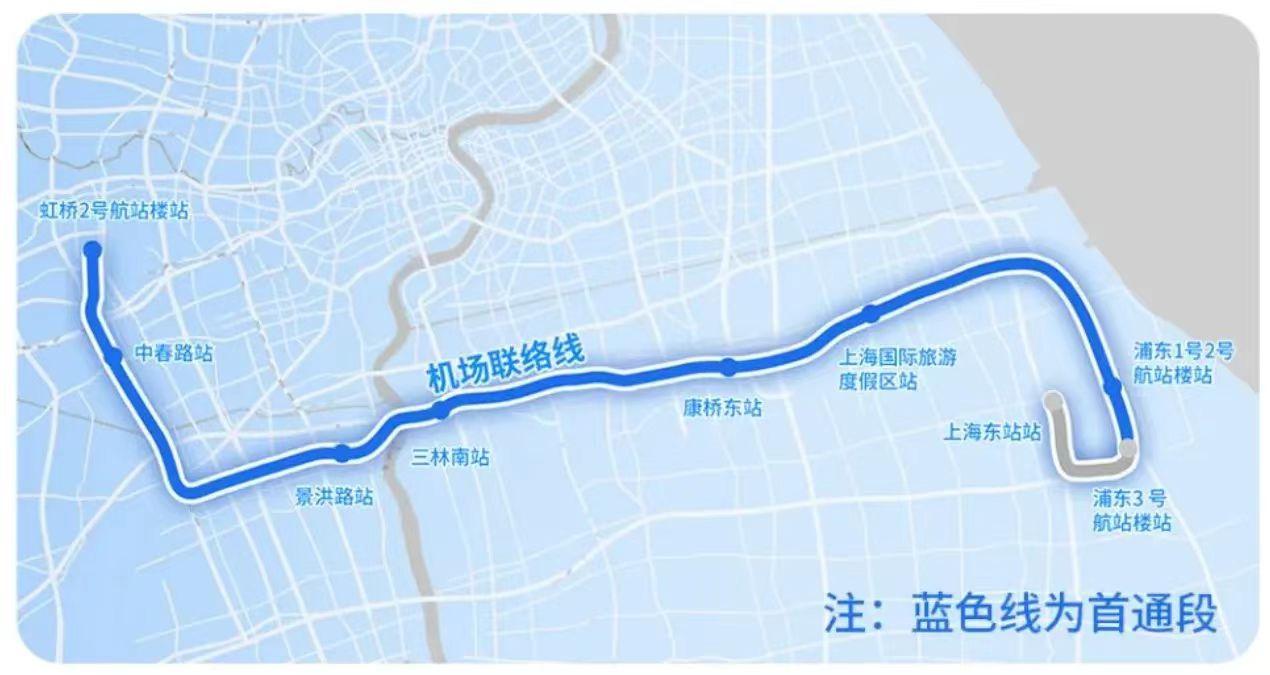
What makes the Airport Link Line stand out?
I took its maiden trial ride, spending over an hour traveling back and forth to check out all seven stations one by one.
First off, all stations have adopted the latest "permanently open" gate mode for ticket barriers.
Every barrier gate, whether at entry or exit, stays open at all times.
Passengers carrying large luggage can walk straight through after swiping their cards, which is extremely convenient.
Second, there are intelligent electronic display screens.
Each station is equipped with multiple screens that broadcast real-time train arrival information and waiting times.
At Hongqiao Airport, even the partition fences have been renovated, with two display screens installed right at the waiting area to help business travelers easily keep track of schedules.
The screens also use color coding to show crowd levels in different carriages: green means spacious, and red means crowded.
Passengers can pick the carriage that suits them best.
Last but not least, the highly anticipated train interiors are noticeably different from regular metro carriages, with plenty of customised features designed for business travelers.
For example, the seats are mostly arranged in transverse rows, just like those on Metro Line 16 and high-speed trains.
Addressing the top concerns of long-distance commuters—luggage storage and charging facilities—each carriage has dedicated luggage zones complete with fastening straps.
Wired charging ports are available between the transverse seats, and multiple wired and wireless charging sockets are installed at the carriage connections.
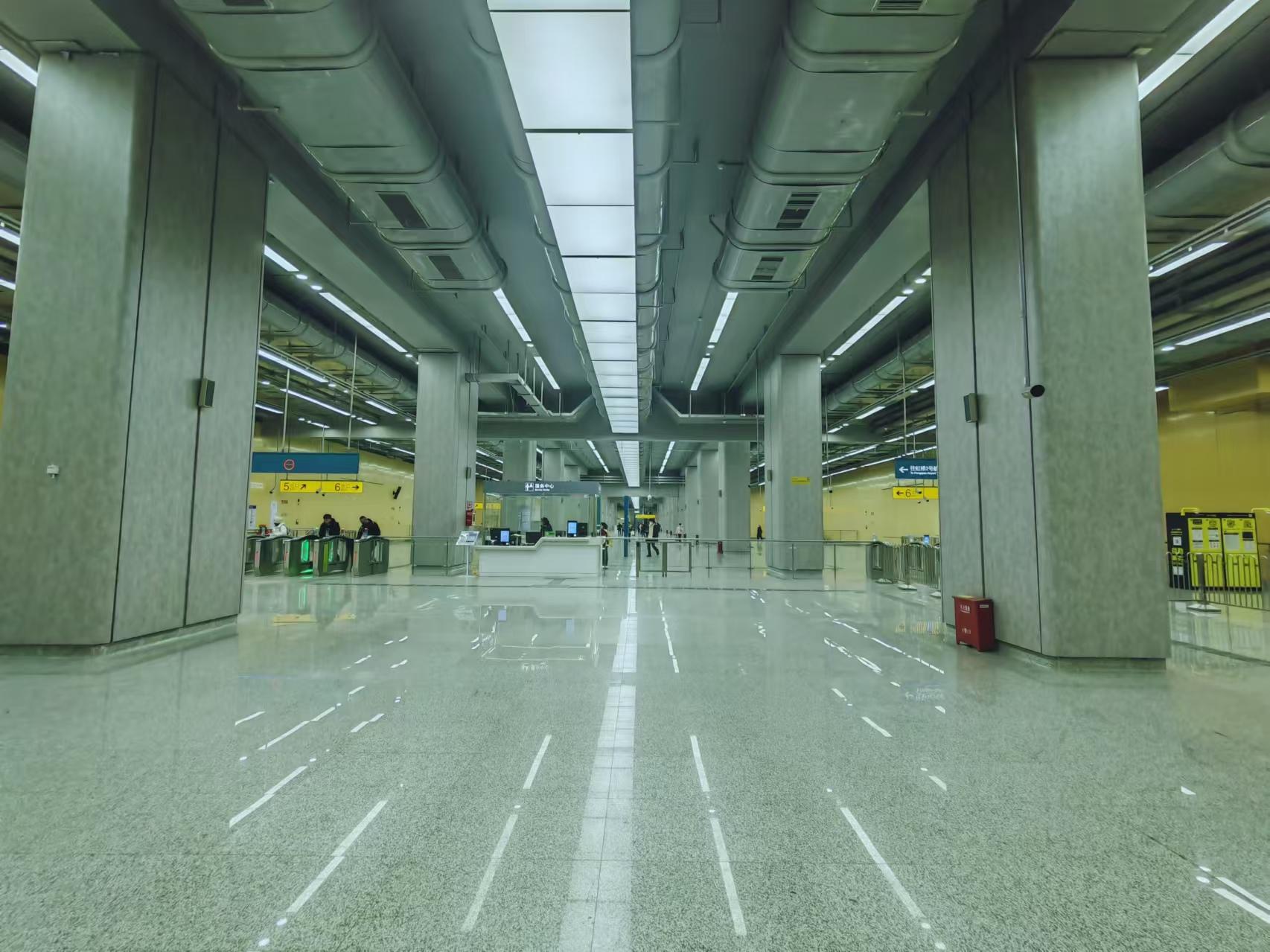
From my observation, among the seven stations currently open, Hongqiao Airport Terminal 2 Station boasts the largest passenger flow by far.
The exit layout is extremely user-friendly: upon stepping out, the ticket check-in gates for high-speed rail are on the left, while the passage leading to Terminal 2 sits on the right.
Zhongchun Road Station also sees heavy foot traffic, as it offers an in-station interchange with Metro Line 9.
It is merely one stop away from Jiuting in Songjiang District, and conveniently close to Sijing and the large Sheshan North residential complex.
Many office workers residing in Songjiang opt to transfer here for a speedy commute to Pudong for work.
After riding the line myself, I personally feel the Airport Link sits somewhere between a metro and an intercity high-speed railway.
Its travel speed is considerably higher than that of standard metro lines, yet it delivers the same smooth ride quality as high-speed trains.
The seats are comfortable, and charging ports plus interchange access at every station are readily available.
The only downside is that during the trial operation phase, the train headway is fairly long—if you miss one service, you will have to wait 10 minutes. It is expected that the intervals will be gradually shortened in subsequent adjustments.
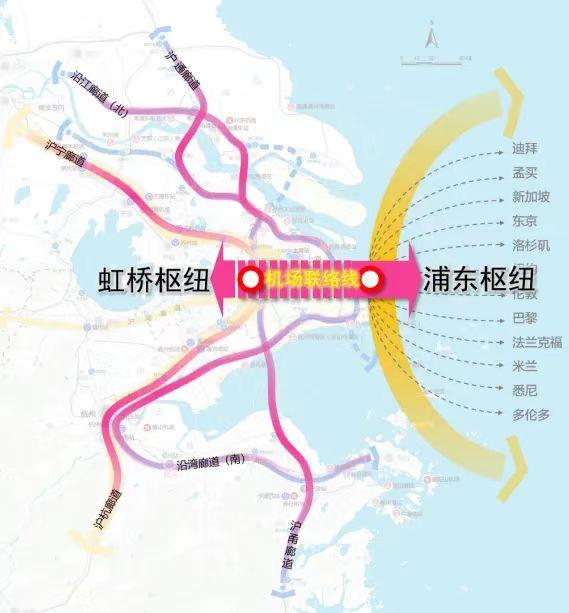
"Lingang feels close to the world yet far from the rest of Shanghai." Many people who have visited Lingang share this impression.
It boasts exceptionally favorable talent policies and an abundance of scenic spots for recreation, yet commuting there is undeniably exhausting.
Aside from Metro Line 16 and long-distance self-driving, there have been few convenient travel alternatives.
With the new connecting line completed, Lingang will no longer be so isolated from other districts of Shanghai, marking a major transformation in its transportation layout.
In the future, it will take roughly 15 minutes to travel from Lingang to the Pudong Transport Hub.
Passengers can then take the Airport Link Line for a 20-minute ride to Zhangjiang and reach the Hongqiao Transport Hub in over 40 minutes.
Compounded by the anticipated opening of Shanghai East Railway Station in 2027, alongside planned transit lines including Line 27, Lingang Downtown Line and Phase II of Nanhui Branch Line,
Lingang is poised to see another leap in its overall development stature.
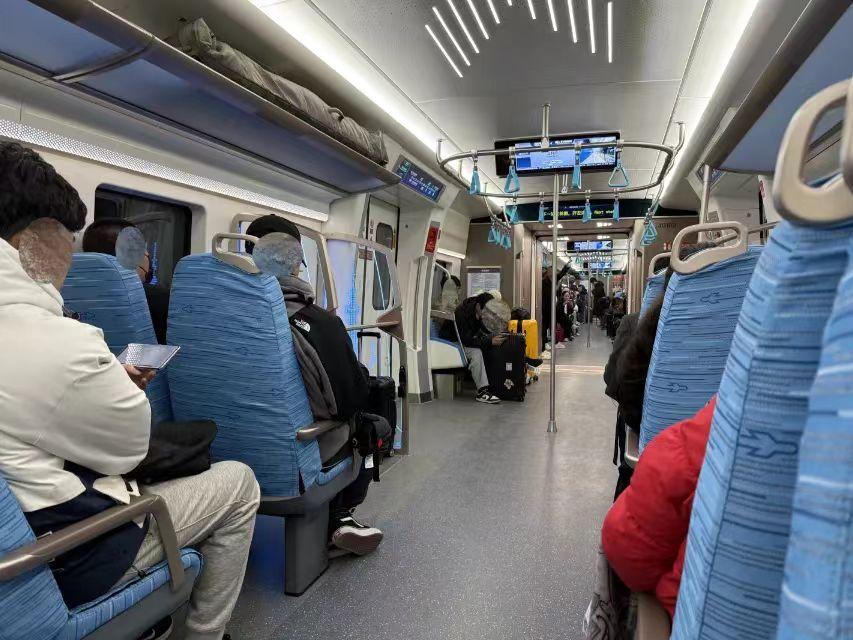
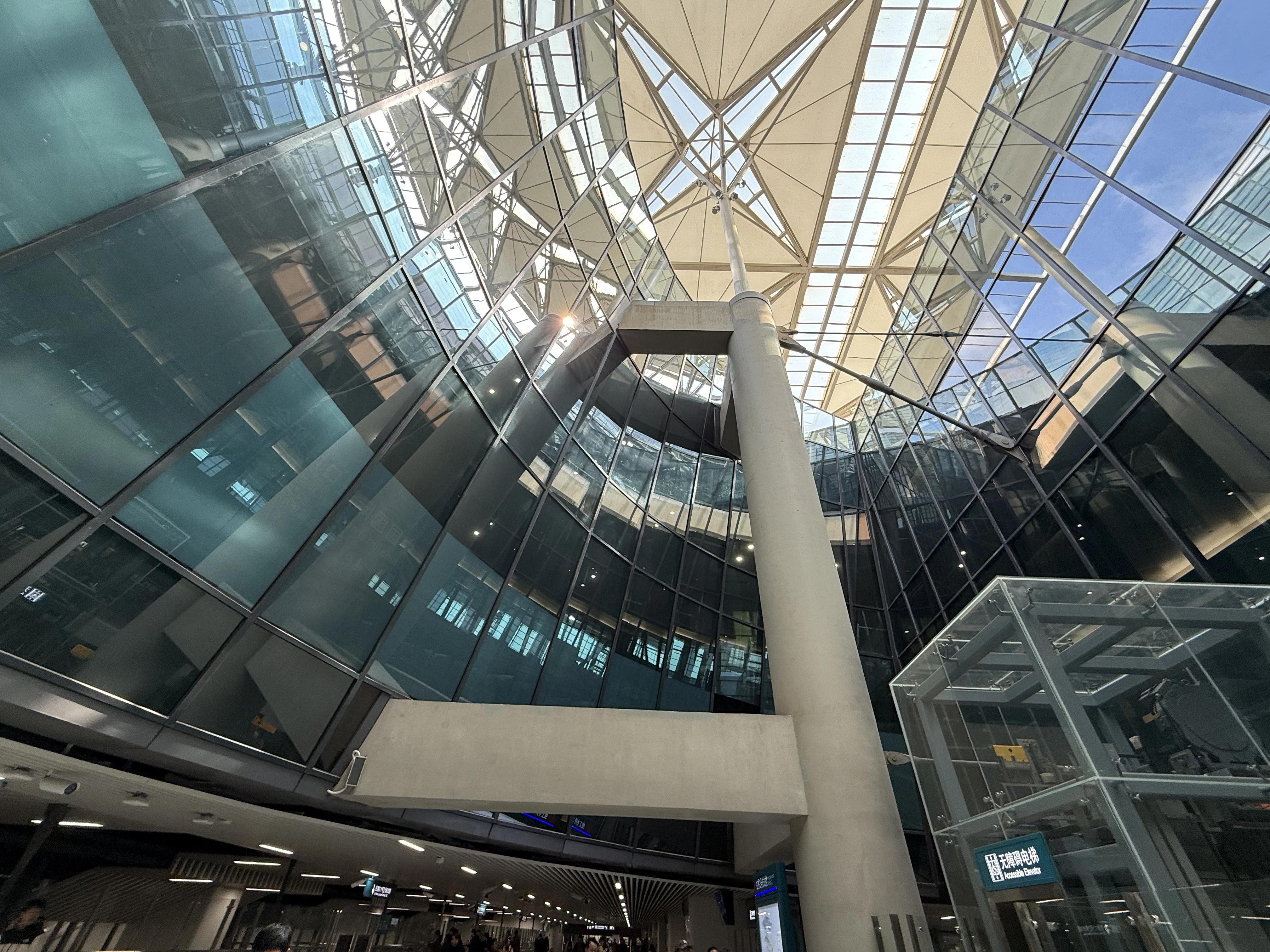
After the first trial ride, I took this Interstellar-themed photo at Terminal 2 of Hongqiao Airport.
It is full of a strong sense of technology and futurism. The planning of rail transit is closely linked to a city's development,
and will ultimately be reflected in housing prices to varying degrees.
The Airport Link Line is transforming far more than Shanghai's rail transit layout, and more profound changes to the property market and people's daily lives are yet to come.